Exodus Wallet – 500 Words Detailed Explanation
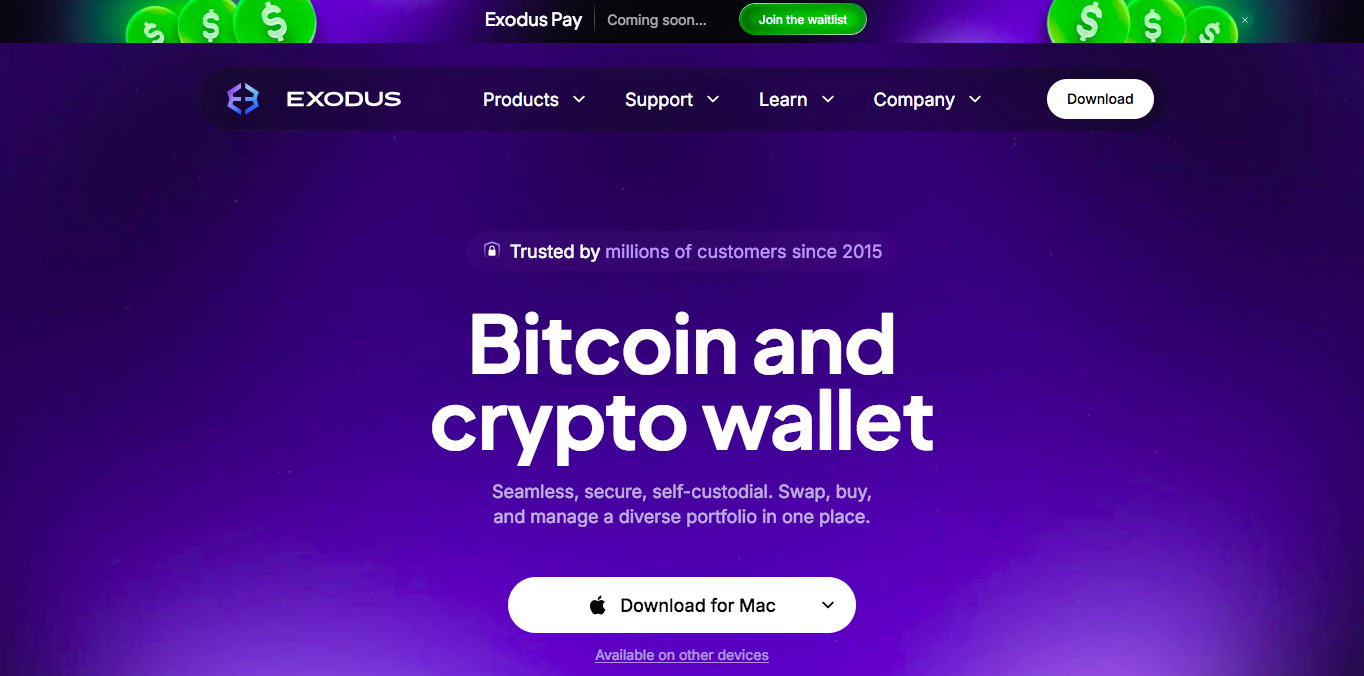
Exodus Wallet is a versatile, non-custodial cryptocurrency wallet designed to make managing digital assets simple, secure, and visually intuitive. Since its launch in 2015, Exodus has grown into one of the most popular wallets in the cryptocurrency space, particularly among beginners and intermediate users who value usability without compromising security. The wallet allows users to store, exchange, and stake cryptocurrencies all within a single, user-friendly platform.
As a non-custodial wallet, Exodus ensures that users have full control over their private keys. Unlike centralized exchanges where funds are held by a third party, Exodus encrypts and stores private keys locally on the user’s device. This means that only the wallet owner can access their funds, providing greater privacy and security. However, users are responsible for safeguarding their recovery phrase and ensuring their device is protected against theft or malware.
Exodus supports a wide variety of cryptocurrencies, including major assets such as Bitcoin (BTC), Ethereum (ETH), Solana (SOL), Cardano (ADA), Litecoin (LTC), and numerous ERC-20 tokens. By supporting hundreds of coins, Exodus enables users to manage diversified portfolios without needing multiple wallets. The wallet also features a clean portfolio dashboard, showing real-time balances, price trends, and allocation charts, helping users track performance and make informed decisions.
The wallet is available across desktop platforms (Windows, macOS, Linux) and mobile devices (iOS and Android), offering cross-platform synchronization. This feature allows users to access the same wallet on multiple devices, providing flexibility and convenience for monitoring balances, sending transactions, and managing assets from anywhere.
A standout feature of Exodus is its built-in exchange. Users can swap one cryptocurrency for another directly within the wallet, eliminating the need to transfer funds to an external exchange. This simplifies trading and reduces potential security risks associated with multiple platforms. While the convenience is significant, users should note that swap fees may be slightly higher compared to traditional exchanges.
Exodus also supports staking for select cryptocurrencies. Staking allows users to earn passive income by participating in the validation and security of blockchain networks. Through the wallet’s interface, users can stake supported assets, track rewards, and manage their staking operations. This feature is especially useful for long-term investors looking to generate additional returns on their holdings.
Security is a core aspect of Exodus Wallet. During setup, users are provided with a 12-word recovery phrase, which acts as a backup for restoring access if the device is lost, stolen, or damaged. This phrase must be kept securely offline. Additionally, Exodus integrates with the Trezor hardware wallet, allowing private keys to be stored offline while still managing assets through Exodus’ interface, significantly enhancing security for larger holdings.
In summary, Exodus Wallet combines usability, security, and multi-functional features in one comprehensive platform. With multi-asset support, built-in exchange services, staking capabilities, and hardware wallet compatibility, Exodus is ideal for both new and experienced crypto users who want a reliable, convenient, and secure solution for managing digital assets. It strikes a balance between simplicity and functionality, making it one of the most accessible wallets available today.